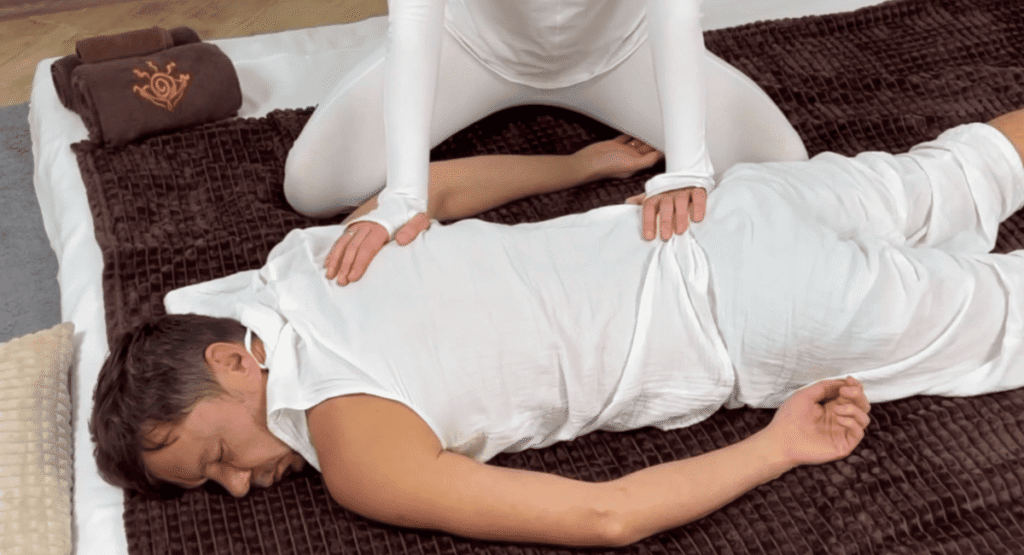
Does Thai massage hurt?
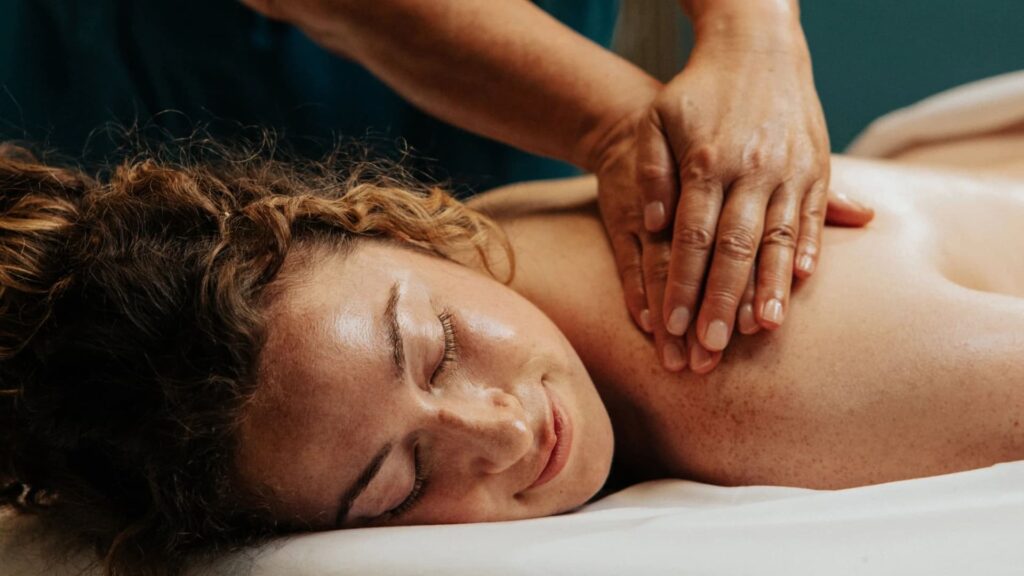
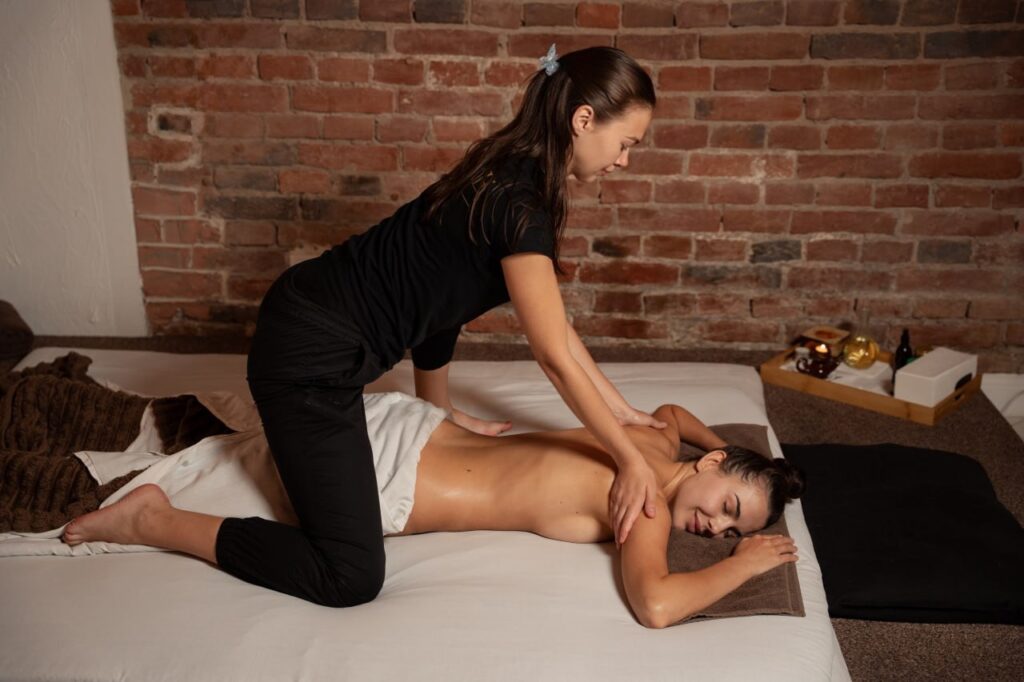
“I’m afraid it will be too intense” — this is something we often hear from clients who keep postponing Thai massage. In our practice, this fear is completely normal. After all, this type of massage truly differs from classical massage. It involves deeper work, stretching, and pressure. However, it is important to understand that Thai massage should not be painful in the literal sense.
Discomfort or pain: what’s the difference?
During a Thai massage, clients experience sensations that are genuinely unfamiliar. This is normal. However, it’s important to note that there is a significant difference between discomfort and pain.
So-called working discomfort is a feeling of pressure, stretching, or tension that is tolerable and can even become pleasant after the body adapts. This is exactly the level we work with.
Pain, on the other hand, is a sharp, unpleasant signal that causes the body to tense up and creates the urge to “escape” the process. In my many years of practice, the guideline is simple: if the body tenses up, it is no longer the right level to work with. My colleagues and I do not work “through pain,” even if a person believes that “it’s necessary for a better effect.” This approach does not deliver the desired result and, on the contrary, may increase tension in the body.
How to determine the right intensity?
One of the key misconceptions is believing that Thai massage is “painful by default.” In reality, the intensity is always selected individually. Specialists at Deluxe By Bezvuliak take into account:
- the client’s physical condition;
- level of preparation and flexibility;
- presence of tension or muscle restrictions;
- previous massage experience.
As a rule, we always start with a gentler format, gradually adapting the body to a higher level of load. Thai massage can be deep and active, but it can also be quite gentle. There is no “one-size-fits-all” scenario.
When do we reduce the intensity or stop the session?
There are certain situations in which it is necessary to change the technique or stop the session altogether, particularly if:
- the client feels sharp or “shooting” pain;
- the body does not relax but instead becomes more tense during the session;
- there is strong discomfort in a specific area;
- the client is not ready for this type of work.
Thai massage does not suit everyone in the same way. There are conditions in which we consciously reduce the intensity or choose a different format. We also take into account pain threshold and the state of the nervous system. If the body is overloaded, even standard pressure may be perceived more sharply.
Another important aspect is the cumulative effect. Thai massage is not about “fixing everything in one session.” In many cases, the first sessions are aimed at preparing the tissues: reducing superficial tension, improving sensitivity, and gradually opening deeper layers. Only after that does a more pronounced therapeutic effect appear.
Expectations vs. reality
Another issue I often encounter in practice is fear of the unknown. Many people imagine Thai massage as something harsh or even traumatic. In reality, it is a controlled and gradual process. After a session, our clients most often note:
- deep relaxation;
- a feeling of lightness in the body;
- improved mobility;
- reduced tension.
And very often we hear the phrase: “I expected it to be painful, but it was completely different.”
What do we explain before the session?
To help you feel calm and comfortable, at Deluxe By Bezvuliak we always discuss several important points before starting:
- you can say at any moment if you feel discomfort;
- the intensity can be adjusted during the session;
- the body’s reactions are normal, and we take them into account.
This approach creates a sense of control and allows you to relax from the very first minutes.
In conclusion, Thai massage is not about pain, but about deep, controlled work with the body. When the procedure is properly tailored and communication with the therapist is open, it delivers the desired result. We always focus on the client’s sensations. This is exactly what allows Thai massage in our salon to be both effective and comfortable at the same time.